
Bio Resources
Advancing Bio Resources for a Carbon-Neutral 2050
Arizona’s diverse bio-based resources—including forest residues, dairy manure, landfill gas and wastewater sludge—can serve as feedstocks for low-carbon fuels and carbon-based materials. Project developers can use anaerobic digestion, gasification and pyrolysis to convert these resources into renewable natural gas, biochar, methanol and other liquid hydrocarbons. Some technologies capture methane that would otherwise escape into the atmosphere, enabling its use as pipeline-compatible fuels.
Beyond fuels, these resources may enable future production of higher-value carbon products—such as activated carbon, soil amendments and platform chemicals—that could support a more diversified and circular bioeconomy.
AzCaNE convenes cross-sector partners and maps statewide bio-based resources to inform and guide exploration of these opportunities. While challenges remain in economics and logistics, thoughtful deployment can support rural economies, reduce wildfire risk and cut greenhouse gas emissions.

Pathways of Interest
Evaluating Bio-based Opportunities
AzCaNE is partnering with Energy Vision to assess Arizona’s potential to produce renewable natural gas from locally available organic resources, including livestock waste, landfill gas, wastewater, food waste and woody biomass. The study aggregates data on feedstock availability and uses established modeling tools to estimate potential gas production volumes, environmental benefits and economic impacts.
Analyzing Environmental and Economic Value
The analysis explores methane mitigation opportunities, carbon intensity metrics, wildfire risk reduction from woody biomass and community benefits such as job creation and local investment. It also examines Arizona’s policy and regulatory landscape, highlighting opportunities and barriers to renewable natural gas deployment.
Informing Pathways Forward
By identifying key use cases—such as transportation, industrial processes and power generation—and estimating potential price ranges, the study will inform future decision-making.
Biomass to X
What are we solving?
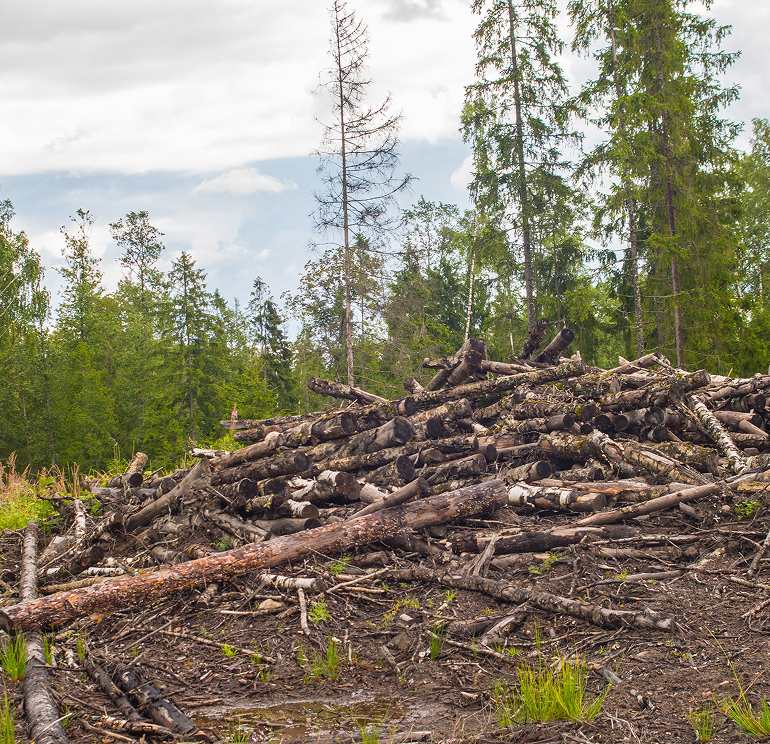
Across the American West, wildfires are worsening. Decades of fire suppression have led to a build up of small trees, wood and other plant matter on forest floors that can fuel rapid, large-scale fires. This type of biomass has low market value, making it expensive to remove and leaving communities vulnerable. Biomass to X is an approach that creates market-driven solutions, turning waste into valuable products, funding ongoing restoration efforts and boosting rural economies.


See how the model works
Introducing the ASU Biomass to X Initiative in Arizona’s four forest restoration areas.
Supply Chain
The Biomass to X supply chain starts in forest ecosystems, working with thinning operations that remove hazardous biomass, and ends with high-value commercial products that then fund ongoing restoration efforts. This approach links harvesting crews and transportation with processing facilities, ensuring a steady and cost-effective flow of material.
By aligning supply with processing capacity and market demands, this initiative creates the level of reliability investors and end-users seek before committing to large-scale production age.

Commercialization technologies
Biomass to X is technology agnostic and supports any commercially viable process that can turn excess biomass into usable products. Biochar can be used for carbon storage and water filtration, renewable natural gas is utilized in clean energy markets and e-methanol can be applied to low-carbon fuels and other industrial uses.
These top contenders all have strong market demand and can easily be scaled as part of a comprehensive wildfire mitigation strategy.

Biomass to X
Spotlight?


Soft launch: Biomass to X Data Room
The Biomass to X Data Room is a secure online hub with a variety of resources for developers, investors and community partners. Providing access to resource maps, technical studies, market analyses and financial models helps accelerate project timelines and enables stakeholders to make well-informed investment decisions.
Biomass to X was The soft launch invites early users to explore the tools, provide feedback and help refine the platform before it is fully released to the public.as a key innovation driving progress toward these goals.

Building a wildfire-resilient future
The webinar, Building a Wildfire-Resilient Future: Markets, biomass and partnerships, featured leaders from forestry, finance policy to explore how biomass markets, large-scale restoration and the Four Forest Restoration Initiative can reduce wildfire risk and drive rural economic growth.
Biomass to X was highlighted as a key innovation driving progress toward these goals.
Applying technologies to reduce the risk of catastrophic wildfires
The second installation in the Biomass to X webinar series is occurred on Thursday, September 11, 2025. This conversation took an in-depth look at biochar, renewable natural gas and e-methanol. Experts discussed how to scale these solutions to turn hazardous forest biomass into marketable products, building economic incentives for wildfire mitigation.